
Donate Meals for Children With Disabilities Donate for Nutrition and Daily Meals for Children with Disabilities in India.A regular meal does more than satisfy hunger. It helps create structure in a child’s day and supports participation in education, therapy and daily activities. For organisations serving children with disabilities, meal programmes also involve planning, safe food preparation, hygiene, feeding assistance, accessible seating and attention to individual dietary needs.
When you donate meals for children with disabilities, your contribution may help a rehabilitation organisation meet recurring food and meal-service expenses. Vegesna Foundation is a Hyderabad-based non-profit organisation supporting children and persons with disabilities through education, rehabilitation, therapy and care.
Individuals, families, businesses and community groups can contact the Foundation to ask about its current nutrition and meal requirements before donating money, groceries or cooked food.
Why Nutrition Support Should Be Disability-Inclusive
Children with disabilities have the same right to adequate nutrition as other children, but some may encounter additional barriers. These can include difficulty reaching nutrition services, dependence on caregivers, inaccessible dining spaces, communication barriers, feeding difficulties or the need for an individually advised food texture.
Disability does not automatically mean that a child needs a special diet. Requirements differ from child to child and should be determined by appropriate professionals when necessary.
An inclusive meal programme may need to consider:
- Nutritious and varied food.
- Safe drinking water.
- Food hygiene and storage.
- Accessible tables and seating.
- Additional time for meals.
- Respectful feeding assistance.
- Communication of preferences and discomfort.
- Allergies, intolerances or medically advised restrictions.
- Suitable food texture where professionally recommended.
- Monitoring and referral when feeding concerns arise.
UNICEF notes that children with disabilities can face limited access to healthcare and nutrition and supports disability-inclusive health and nutrition services. Read UNICEF’s overview on children with disabilities.
What a Daily Meal Donation May Support
Depending on the Foundation’s current programme and donor instructions, contributions may help cover:
- Rice, grains and pulses.
- Vegetables and seasonal fruit.
- Milk or other approved dairy items.
- Eggs or other protein foods where used by the programme.
- Cooking oil, spices and basic ingredients.
- Breakfast, lunch or evening snacks.
- Drinking-water and meal-service supplies.
- Kitchen fuel and utilities.
- Food storage and refrigeration.
- Cleaning and hygiene materials.
- Accessible plates, cups or utensils.
- Staff time connected with preparation and meal assistance.
The Foundation should confirm its menu, beneficiary numbers, dietary practices and current requirements. Donors should not assume that every listed item is used or suitable.
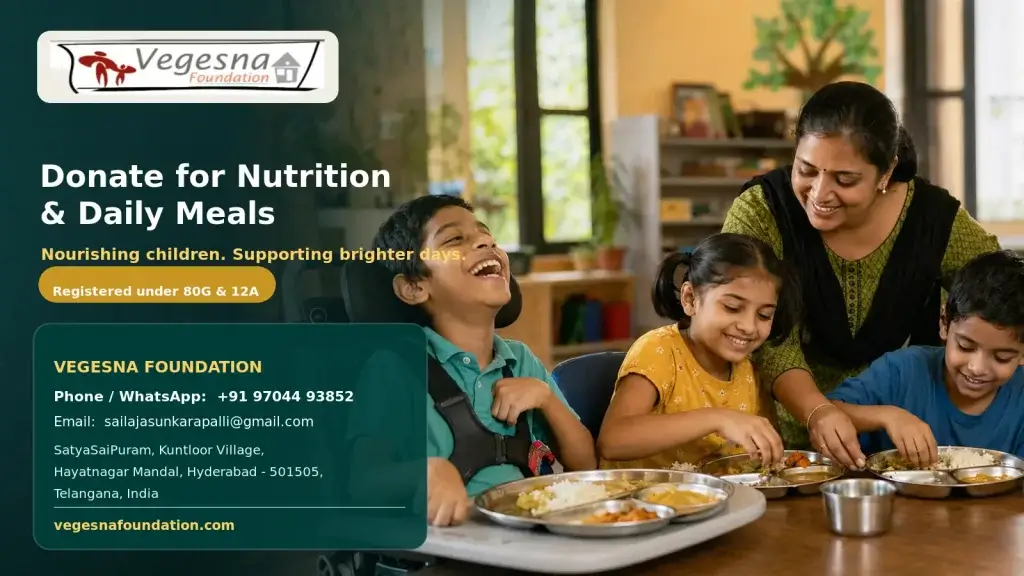
Nutrition Is More Than Donating Groceries
Menu Planning
A meal programme should consider age, variety, local food preferences, availability, budget and any professionally documented dietary requirements. A qualified nutrition or healthcare professional should advise when individual clinical needs are involved.
Safe Food Preparation
Ingredients must be sourced, stored, washed, prepared and served safely. Perishable items require appropriate temperature control, and kitchen surfaces and utensils need routine cleaning.
Inclusive Mealtimes
Children should be seated safely and comfortably and given adequate time. Assistance should be respectful, responsive and appropriate to the child’s abilities.
Accessible Utensils
Some children may benefit from adapted cups, plates, handles or non-slip supports. These should be chosen according to actual need rather than distributed automatically.
Trained Feeding Assistance
Caregivers and staff may require guidance on positioning, pacing, communication and signs of difficulty. Feeding should never be rushed or forced.
Monitoring and Referral
Persistent coughing during meals, recurrent choking, significant food refusal, prolonged mealtimes, unexplained weight change or other concerns require appropriate professional assessment. A donation campaign should never offer online diagnosis or treatment advice.
Feeding and Swallowing Difficulties
Some children with developmental, neurological or physical disabilities may experience difficulty chewing, drinking or swallowing. Others may have sensory sensitivities, limited food acceptance or difficulty communicating hunger, discomfort or fullness.
These situations require individual attention. Recommendations may involve a doctor, dietitian, speech-language professional, occupational therapist or another qualified practitioner, depending on the concern.
Do not change food texture, thicken liquids, introduce supplements or restrict foods solely on the advice of an unqualified donor or social-media post. A fundraising article cannot replace professional assessment.
Responsive and Respectful Feeding
Responsive feeding involves recognising and responding to signs of hunger and fullness while encouraging participation without pressure or force. Communication may occur through speech, gesture, facial expression, pictures, signs or an assistive communication method.
Respectful mealtime support can include:
- Explaining what is being served.
- Offering manageable portions.
- Allowing enough time.
- Supporting the child to participate where possible.
- Observing signs of fatigue or discomfort.
- Avoiding punishment or humiliation around food.
- Following professional guidance for positioning and texture.
The WHO and UNICEF responsive-feeding brief describes responsive feeding as part of nurturing care and adequate childhood nutrition.
Ways to Donate for Daily Meals
Sponsor One Day of Meals
A donor may ask the Foundation about the estimated cost of meals for one day. The amount should be based on the actual number of beneficiaries, menu and operating costs—not an assumed figure copied from another NGO.
Sponsor Meals Every Month
A recurring contribution can help an organisation plan for groceries and routine kitchen expenses. Monthly donors should receive the Foundation’s approved payment details and receipt information.
Read How Monthly Donations Transform the Lives of Children with Disabilities after confirming the final live permalink.
Donate Groceries from an Approved List
The Foundation may maintain a requirement list showing preferred brands, pack sizes, quantities and delivery timing. Ask before purchasing because storage capacity and menu requirements can change.
Support Kitchen Equipment and Maintenance
Subject to an assessed requirement, donors may help with food-storage containers, cooking equipment, refrigeration, accessible dining furniture, water purification or repairs. Confirm specifications, installation and service arrangements first.
Mark a Special Occasion Responsibly
Families may sponsor an approved meal programme for a birthday, anniversary or remembrance. The occasion should not disrupt the children’s routine or be used to demand photographs, personal information or public recognition.
Organise Employee Giving
Companies can invite voluntary employee contributions or offer matching support. Corporate donors should complete their own due diligence and should not automatically describe a normal charitable donation as CSR expenditure.
Donating Cooked Food: Ask Before You Prepare It
Cooked-food donations can create food-safety and coordination risks when they arrive without notice. Before arranging prepared food, confirm:
- Whether the Foundation accepts cooked food.
- Required quantity and serving time.
- Approved menu and ingredients.
- Allergy or dietary restrictions communicated by the Foundation.
- Preparation, transport and temperature-control standards.
- Packaging and waste-management requirements.
- Whether outside kitchens or vendors must meet specified conditions.
Do not deliver leftover event food or food of uncertain preparation history. A monetary donation or approved grocery contribution may be safer and easier to manage.
Why Regular Support Is Valuable
Food is a recurring expense. A one-time donation helps for a limited period, while predictable support can improve purchasing and menu planning.
Regular contributions may help the Foundation:
- Plan staple purchases.
- Maintain meal frequency.
- Respond to seasonal price changes.
- Purchase fresh foods consistently.
- Budget for fuel, storage and hygiene.
- Reduce last-minute shortages.
The value of a contribution should not be expressed through unverified claims such as a fixed number of children fed per rupee. Actual costs change with the menu, prices, beneficiary numbers and programme conditions.
Meal Donations in Hyderabad
Vegesna Foundation is located at SatyaSaiPuram, Kuntloor Village, near Hayatnagar, Hyderabad. Donors from Hyderabad, Secunderabad, Hayatnagar, LB Nagar, Uppal, Kukatpally, Gachibowli and other Telangana locations can contact the Foundation about meal sponsorship, approved groceries or kitchen requirements.
Local support may make scheduled grocery delivery and vendor coordination easier. Donors outside Telangana can contribute through the Foundation’s authorised payment process.
International donors must contact the Foundation before transferring funds. Overseas contributions must follow applicable legal, banking and regulatory requirements.
Questions Donors Should Ask – Donate Meals for Children with Disabilities in India
Before contributing, ask:
- What is the current meal or nutrition requirement?
- How many beneficiaries are included in the programme?
- Is the request for money, groceries, cooked food or equipment?
- What menu and food-safety procedures are followed?
- Are any individual dietary needs managed separately?
- What is the approved payment or delivery process?
- What receipt or acknowledgement will be provided?
- How will restricted funds be handled if costs change?
Clear communication helps prevent waste and protects the dignity and safety of children.
80G and 12A Information
Vegesna Foundation states that it is registered under Sections 80G and 12A. Eligible Indian donors may qualify for an income-tax deduction under Section 80G, subject to the Foundation’s current approval, donor circumstances, applicable tax rules, payment method, qualifying conditions and documentation.
Request the current 80G approval details and a proper donation receipt. Use an approved traceable payment method. Donations above ₹2,000 made in cash are not eligible for deduction under Section 80G according to current Income Tax Department guidance.
The tax treatment of an in-kind grocery or food donation may differ from a monetary contribution. Donors should seek advice from a qualified tax professional rather than assuming that every food donation qualifies for a deduction.
Frequently Asked Questions – Donate Meals for Children with Disabilities in India
Can I sponsor daily meals for children with disabilities?
Yes. Contact Vegesna Foundation to ask about its current meal programme, estimated cost, approved payment method and receipt process.
Can I donate groceries instead of money?
Possibly. Request the Foundation’s current approved grocery list before purchasing. Pack size, quantity, storage space and menu requirements can change.
Does Vegesna Foundation accept cooked food?
Confirm directly before preparing anything. Cooked-food donations require coordination, food-safety controls, appropriate quantity and timely delivery.
Can I sponsor a meal for my birthday or anniversary?
You may ask about an approved occasion-based meal sponsorship. The activity should respect the children’s privacy, dignity and normal routine.
Are all children with disabilities given the same diet?
No. Disability alone does not determine diet. Some children may have individual requirements advised by qualified professionals.
Can my donation be used for kitchen equipment?
Yes, if Vegesna Foundation has a verified requirement. Ask for the specification, quotation, installation needs and maintenance plan before contributing.
How can I donate meals through Vegesna Foundation?
Use the phone, WhatsApp or email details below. Ask for the current requirement and authorised payment or delivery instructions.
Help Sustain Nutritious and Inclusive Mealtimes
Consistent meal support can help a rehabilitation and education programme maintain a safe and structured daily routine. The most useful donation is one coordinated with the Foundation’s actual menu, storage, food-safety and beneficiary requirements.
Contact Vegesna Foundation before sending money, groceries, cooked food or kitchen equipment. Your responsible support can help sustain nutritious meals while respecting each child’s individual needs and dignity.
Vegesna Foundation
SatyaSaiPuram, Kuntloor Village
Hayatnagar Mandal, Hyderabad – 501505
Telangana, India
Phone/WhatsApp: +91 97044 93852
Email: sailajasunkarapalli@gmail.com
Website: https://vegesnafoundation.com/
Suggested Donations:
- Donate for charity
- Donate for Autism
- Sponsor a child with autism
- Donate for Speech therapy
- Donate for occupational therapy
- Donate for physiotherapy
- Donate for residential care
- Donate for special education
- Donations for children with intellectual disabilities in India
- Corporate donations for children with disabilities
- Child welfare NGO in Hyderabad
- Donate for Autism therapy
- NGO for Autism in Hyderabad