
How Donations Help Children with Intellectual Disabilities in India,Donations for children with intellectual disabilities in India can help provide access to special education, therapeutic support, personal care, nutrition and opportunities for greater independence. For many families, arranging consistent, long-term support for a child with an intellectual disability can be financially and emotionally challenging.
A meaningful donation does more than fund a single session or activity. It can help create a structured environment in which children receive patient guidance, develop practical skills, communicate more effectively and participate more fully in family and community life.
Vegesna Foundation is a Hyderabad-based charitable organisation supporting children and individuals with intellectual and developmental disabilities. Through contributions from compassionate donors, the organisation works to provide care, education, therapy and developmental support according to individual needs.
Understanding Intellectual Disabilities
An intellectual disability can affect a person’s learning, reasoning, communication, problem-solving and daily living skills. The level of support required differs considerably from one individual to another.
Some children may need assistance with communication and classroom learning, while others may require support with mobility, self-care, behaviour, social interaction or everyday activities.
An intellectual disability should never be understood as an absence of ability or potential. With suitable support, patience and opportunities, children can develop useful skills, express themselves and participate more actively in society.
The Rights of Persons with Disabilities Act, 2016 recognises intellectual disability as one of the specified categories of disability in India. It reflects the importance of dignity, accessibility, participation and equal opportunity for persons with disabilities.
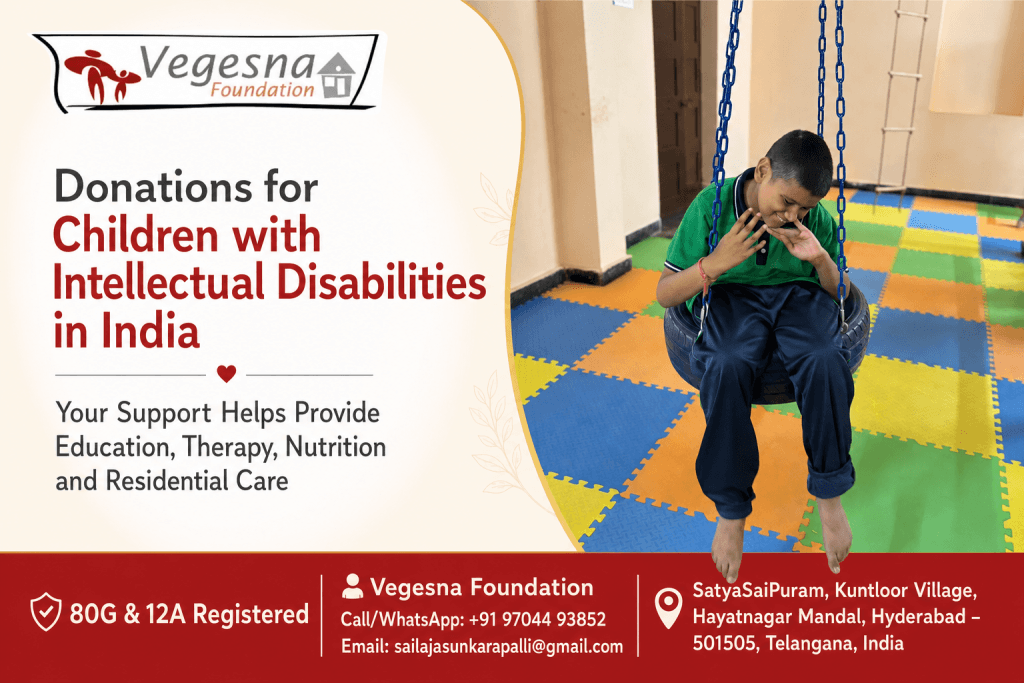
Why Children with Intellectual Disabilities Need Continued Support
Developmental support is rarely a one-time intervention. Children may need consistent assistance over months or years.
Depending on the child’s needs, support may include:
- Special education
- Speech and communication assistance
- Occupational therapy
- Physiotherapy
- Behavioural guidance
- Daily living skills
- Social-development activities
- Nutrition and personal care
- Recreational activities
- Residential care
- Family and caregiver support
When these services are provided regularly, children have more opportunities to learn and practise skills in a familiar and supportive environment.
Donations help charitable organisations continue this work, particularly for children whose families cannot independently afford all the required services
How Your Donation Can Make a Difference – Donations for Children with Intellectual Disabilities in India
1. Supporting Special Education
Children with intellectual disabilities may require individualised teaching methods, smaller learning groups, repetition, visual aids and practical activities.
Donations can help support:
- Special educators
- Classroom materials
- Individual learning plans
- Educational aids
- Activity-based learning
- Pre-vocational training
- Accessible learning environments
The objective is not merely academic achievement. Special education can also help children develop communication, social interaction, self-care and functional skills.
UNICEF states that children with disabilities have a right to inclusive and quality education. Supportive teaching practices can help children participate and learn according to their potential.
2. Providing Occupational Therapy
Occupational therapy can help children develop skills required for everyday life. These may include dressing, eating, writing, holding objects, maintaining attention and coordinating movement.
Your donation may support therapy equipment, trained professionals and structured activities designed around individual needs.
Regular occupational therapy can help some children participate more independently in home, classroom and community activities.
3. Supporting Physiotherapy
Children with associated physical or movement difficulties may require physiotherapy to support mobility, posture, balance, muscle strength and coordination.
Donations can contribute towards:
- Physiotherapy sessions
- Mobility exercises
- Therapy equipment
- Posture and balance training
- Individual physical-development plans
The expected progress differs for every child. Consistency, professional assessment and family involvement remain important.
4. Improving Speech and Communication
Some children with intellectual or developmental disabilities may find it difficult to express their needs, understand language or participate in conversations.
Communication support may include:
- Speech therapy
- Language-development activities
- Picture-based communication
- Gestures and visual aids
- Alternative communication methods
- Social communication exercises
Helping a child communicate can reduce frustration and improve participation in learning, relationships and daily activities.
5. Supporting Nutrition and Daily Care
Healthy food, personal hygiene and a safe daily routine are essential for every child. Residential and day-care programmes require continuous resources to provide nutritious meals, clean surroundings and attentive personal care.
Donations may help cover:
- Nutritious meals
- Drinking water
- Hygiene supplies
- Clothing and bedding
- Personal-care materials
- Safe transportation
- General health monitoring
These everyday needs may not always receive the most attention, but they are fundamental to a child’s comfort, dignity and well-being.
6. Helping Provide Residential Care
Some children and adults with intellectual disabilities may require a safe residential environment because of family circumstances or the level of care they need.
Residential support involves much more than accommodation. It requires trained caregivers, meals, hygiene, supervision, activities, healthcare coordination and emotional support.
Donations can help organisations maintain a stable and respectful living environment for residents requiring long-term assistance.
7. Developing Vocational and Life Skills
As children grow older, they may benefit from structured training in practical and pre-vocational skills.
Depending on individual ability, activities might include:
- Personal grooming
- Household tasks
- Gardening
- Art and craft work
- Packing and sorting
- Simple workplace routines
- Money awareness
- Social and communication skills
Such training can promote confidence, participation and greater independence.
Why Regular Donations Are Valuable
One-time donations are helpful, but recurring contributions can provide greater stability. Therapies, education, meals, salaries, maintenance and residential care involve continuing expenses.
A monthly contribution can help an NGO plan programmes and maintain services more consistently.
Donors may choose to support:
- A child’s education
- Therapy sessions
- Daily meals
- Residential care
- Learning materials
- Assistive equipment
- Staff and caregiver support
- General programme requirements
Even a modest recurring contribution can become meaningful when it supports a child’s needs consistently.
Supporting a Disability NGO in Hyderabad
Donating to a disability NGO in Hyderabad enables individuals, families, businesses and community groups to support children closer to home.
Vegesna Foundation serves children and individuals requiring special education, therapy and care from its centre at Kuntloor, Hyderabad.
Supporters may contribute financially, sponsor specific requirements, provide appropriate materials or help spread awareness about the organisation’s work.
Before making an in-kind donation, contact the Foundation to understand its current needs. This helps prevent unsuitable items from being collected and ensures that the contribution is genuinely useful.
Tax Benefits for Eligible Indian Donors – Donations for Children with Intellectual Disabilities in India
Vegesna Foundation holds 80G and 12A registrations.
Eligible Indian taxpayers may be able to claim a deduction for qualifying donations under Section 80G of the Income Tax Act, subject to the applicable conditions and the donor’s tax situation.
Donors should:
- Use an accepted payment method
- Provide the details required for the receipt
- Collect the official donation receipt
- Retain the receipt for tax records
- Consult a qualified tax adviser when necessary
Registration under 80G does not mean that every donation automatically qualifies in every situation. The applicable deduction depends on prevailing rules and the donor’s eligibility.
Frequently Asked Questions – Donations for Children with Intellectual Disabilities in India
How do donations help children with intellectual disabilities?
Donations can support special education, speech therapy, occupational therapy, physiotherapy, nutrition, personal care, learning materials and residential support. The use of funds depends on the organisation’s current requirements.
Can I sponsor the education or therapy of a child?
Sponsorship options may be available depending on the Foundation’s programmes and current needs. Contact Vegesna Foundation before contributing towards a particular purpose.
Can I make a monthly donation?
Regular donations can help organisations plan continuing expenses such as education, therapy, meals, caregiving and residential services. Contact the Foundation for available recurring-contribution methods.
Is my donation eligible for an 80G tax deduction?
Vegesna Foundation has 80G registration. Eligible donations may qualify for a deduction subject to Indian income-tax rules, payment method and the donor’s eligibility. Retain the official receipt and consult a tax professional when required.
Can I donate food, clothes or educational materials?
In-kind contributions may be accepted when they match the Foundation’s actual requirements. Contact the organisation before purchasing or delivering materials.
Can people outside India donate to Vegesna Foundation?
International contributions are governed by specific Indian regulations. Overseas donors should contact Vegesna Foundation directly and confirm whether the organisation is currently authorised to receive foreign contributions before making a payment.
Help Create Opportunities, Dignity and Hope
Every child deserves care, respect and an opportunity to develop their abilities. Your contribution can help sustain special education, therapeutic support, nutrition, personal care and developmental programmes for children and individuals with intellectual disabilities.
Support Vegesna Foundation and become part of an effort to create a more inclusive and compassionate society. We welcom Donations for Children with Intellectual Disabilities in India
Contact Vegesna Foundation
SatyaSaiPuram, Kuntloor Village
Hayatnagar Mandal
Hyderabad – 501505
Telangana, India
Phone: +91 97044 93852
Email: sailajasunkarapalli@gmail.com
Donations for Children with Intellectual Disabilities in India, Contact Vegesna Foundation today to ask about its current requirements, sponsorship opportunities and approved donation methods.
You May read the following: